Research-based personas: why the "Based on" line matters most
The difference between a persona built from research and one built from assumptions, how to tell them apart, and how to turn the second into the first.
Two personas can look identical on the page. Same layout, same name, same cheerful illustration, same bulleted goals. One came from four interviews and a stack of support tickets. The other came from an afternoon's brainstorm. A reader cannot tell them apart, which is exactly the problem. This guide is about that difference: what a research-based persona is, why the line at the bottom of the page is the most important one, and how to move an assumption-based persona toward the real thing.
What "research-based" means
A persona is research-based when every claim on it can be traced to something somebody observed or said. The quote is a sentence a real person spoke. The frustrations name things that happened. The scenarios describe moments the researcher watched or was told about in detail. The goals are the outcomes people described wanting, in roughly their words.
It does not mean the persona is a real individual. A research-based persona is a composite: one person who stands in for a pattern that showed up across several people. Hana Nguyen, the clinic scheduler, is nobody in particular. In a research-based version of her, every item on the page would correspond to something at least two schedulers said or did.
The test is simple. Point at any line and ask "where did that come from?" If the answer is an interview, a recording, a ticket, a session, you have a research-based persona. If the answer is "it seemed likely," you have the other kind.
What the other kind is, and why it is not worthless
A persona built without research is a proto-persona or an assumption persona. It is the team's current belief about who they are building for, written down in the shape of a persona.
That has real uses. It makes assumptions visible, which is the first step to testing them. It gives a new team a shared starting point. It tells the researcher what to ask. The problem is not making one; the problem is forgetting what it is. A proto-persona that gets presented, filed and quoted for two years as if it came from research is a fiction with institutional authority.
The "Based on" line
Every persona type in the persona generator ends with a section titled "Based on." It is there to make the difference impossible to lose.
Write it like a citation. "Five interviews with warehouse shift leads at two sites, February 2026; 40 safety near-miss reports from the same period." Or, honestly: "Team assumptions from the March kickoff; not yet tested." Or, as the personas in our example gallery say, "Illustrative composite, not a research persona."
That one line does several jobs at once:
- It tells a reader how much weight the page can bear.
- It tells the team when the persona expires, because research has a date and assumptions do not.
- It makes the persona auditable. Someone can go back to the interviews.
- It prevents the quiet promotion of a guess into a fact.
A persona without a "Based on" line is a persona nobody can check, and personas nobody can check get argued about instead of used.
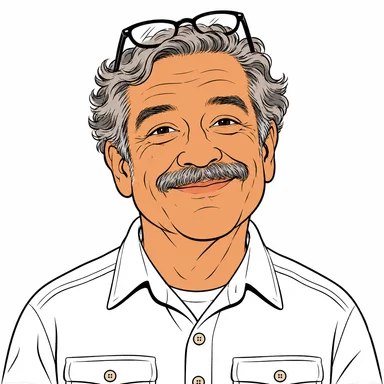
Luis Herrera
Daily bus rider, hospital food services
“The app says the bus is four minutes away. The bus does not know that.”
- Age
- 52
- Location
- Richmond, Virginia
- Occupation
- Kitchen lead, hospital cafeteria
- Education
- High school; culinary certificate
Summary
Luis has not owned a car in nine years. He takes two buses to a 6 am shift and is the first person in the kitchen, so a missed transfer means forty people eat late. He uses the transit app for arrival times, a paper schedule taped inside a cabinet as a backup, and the driver's word above both.
Goals
- Know, before leaving the house, whether the 5:12 bus is actually coming
- Get a warning when a detour moves his stop
- Reload his fare card without a trip to the downtown office
Frustrations
- Arrival predictions that count down to zero and then jump back to twelve minutes
- Service alerts written in agency language that does not name his route
- An app that uses his data allowance on maps he does not need
Scenarios
- A snow morning: he needs to know in one glance whether routes are running on a reduced schedule
- His transfer bus is late; he wants to know if the next one is close enough to wait for
- His fare card is declined at 5 am with no one to call
Comfort with technology
Based on
Illustrative composite. Drawn from public transit rider surveys and from patterns Mobility Labs has seen in mobility and transit projects. Not a research persona: no riders were interviewed for this specific profile.
How to tell them apart on the page
Even without the line, research leaves fingerprints. Research-based personas tend to have:
- Specific frustrations. "Session timeouts that log her out mid-note" rather than "slow software."
- Odd details. The sticky-note wall, the schedule taped inside the cabinet, the password on the fridge. Nobody invents these; they come from being in the room.
- Quotes that sound like speech. Contractions, hedges, a joke. Invented quotes sound like copywriting.
- Contradictions. Real people want things that conflict. Assumption personas are tidy.
- Gaps. A research-based persona leaves a section empty when the research did not cover it. An assumption persona fills every box, because there is nothing to stop it.
Assumption personas tend toward demographics (age, income, a hobby or two) and adjectives ("tech-savvy," "busy," "values convenience"). They describe a segment, not a person, and they describe it in the language of the people who made it rather than the person it is about.
Moving from assumption to research
If what you have is a proto-persona, you do not have to throw it away. Treat it as a list of hypotheses and go check them.
- Mark it. Write "Based on: team assumptions, [date]" at the bottom. Now it is honest.
- Turn each claim into a question. "Values convenience" becomes "Tell me about the last time you gave up on something because it took too long." Our interview questions guide has a full script.
- Talk to three to five people of each customer or visitor type. Interviews, observation, or both. Keep notes with quotes.
- Rewrite the page against the notes. Keep what the research confirmed, change what it contradicted, delete what it did not touch or mark it as still assumed. Replace the invented quote with a real one.
- Update the "Based on" line. It now names the research and its date.
You will usually find the proto-persona was about half right, and the half that was wrong was the half that mattered. That is not a failure; it is the research doing its job.
Research is the part that costs something
Filling in the persona is quick. The tool makes it free. Interviews, recruiting, observation, synthesis: those take time and skill, and that is the part teams skip, which is why so many personas are the decorative kind.
If you have the time, the how to create a user persona guide walks through doing it yourself. If you do not, that is the work Mobility Labs does: we talk to your users and hand back personas with a "Based on" line you can stand behind. Either way, make the page with what you have, write the line honestly, and let it tell you what to do next.